
Subtotal ₦0.00

Email :64
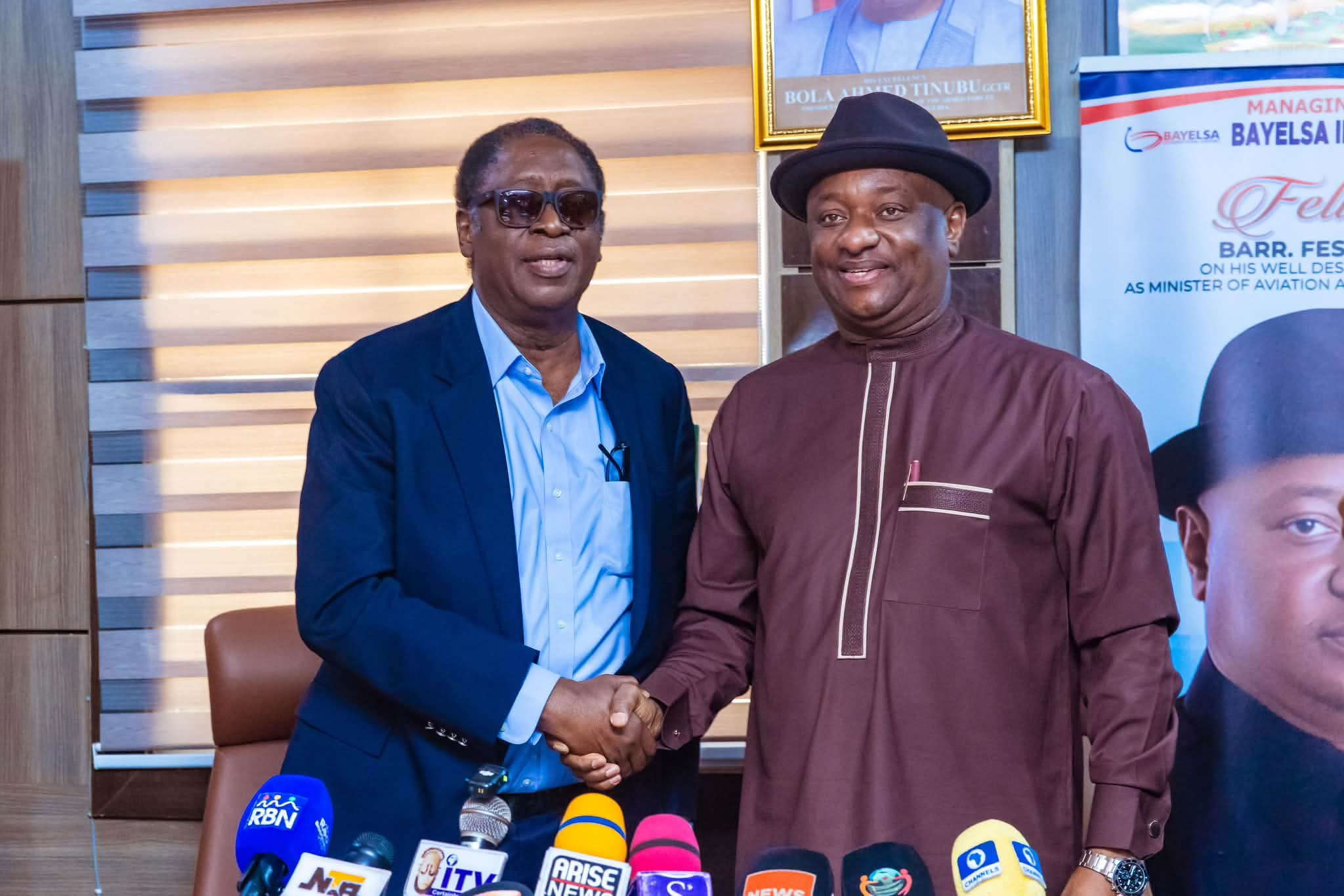
…FG, Bi-Courtney compromise
Nearly two decades of litigation over contractual rights, revenue and airport facilities have ended in a negotiated settlement between the Federal Government and Bi-Courtney. But the real test lies in whether the agreement can unlock MMA2’s commercial potential, restore government revenue and provide a workable model for airport concessions.
For nearly two decades, the relationship between the Federal Government and Bi-Courtney Aviation Services Limited over the Murtala Muhammed Airport Terminal Two (MMA2), Lagos, was defined by disagreements over contractual obligations, operating rights and financial claims.
What began as an ambitious private-sector infrastructure project gradually became one of Nigeria’s most protracted aviation concession disputes, involving competing claims over airport facilities, the interpretation of contractual provisions and the financial consequences of the government’s actions.
The dispute outlived successive administrations, generated years of litigation and raised questions about the management of public-private partnerships in Nigeria’s aviation industry.
Then came Oct. 20, 2026, the Federal Government, the Federal Airports Authority of Nigeria (FAAN), Bi-Courtney and Stabilini Visinoni formally signed agreements intended to bring the prolonged disagreement to an end.
The settlement, approved by the Federal Executive Council (FEC) on April 30, 2026, provides for reciprocal concessions, renewed revenue payments to FAAN, a revised understanding of the parties’ rights over airport facilities and fresh opportunities for commercial expansion.
Yet, beyond the signing ceremony, the agreement represents a significant development in the history of airport concessions in Nigeria. Its implications become clearer when viewed against the circumstances that produced the dispute, the legal battles that sustained it and the compromises required to resolve it.
The beginning: An ambitious private-sector project
The origins of the dispute can be traced to 2003, when the Federal Government awarded Bi-Courtney and Stabilini Visinoni a concession to develop and operate MMA2 under a Design-Build-Operate-Transfer arrangement.
The project followed the destruction of the old domestic terminal at the Lagos airport by fire in 2000. With the need for a replacement facility presenting an opportunity to involve private capital in airport infrastructure, the government turned to a concession model that placed responsibility for financing, construction and operation on the private sector.
The original agreement was signed on April 24, 2003. A subsequent agreement in June 2004 extended the construction period, while a February 2007 addendum extended the concession period from 12 to 36 years.
MMA2 commenced operations in 2007, introducing a privately developed terminal into Nigeria’s domestic aviation market.
The arrangement was significant because it demonstrated how private investment could contribute to airport infrastructure development without relying entirely on direct government funding.
However, the concession involved more than the construction and management of a terminal. Its provisions also addressed the allocation of operating rights, the movement of domestic flights, revenue opportunities and access to other airport facilities.
These provisions would eventually become central to the disagreement between the concessionaire and the government.
The experience also exposed a fundamental challenge in infrastructure concessions: an agreement may establish the rights and obligations of the parties, but its success depends on how those provisions are interpreted and implemented over the life of the contract.
As the concession progressed, disagreements emerged over the government’s obligations under the agreement and the extent of Bi-Courtney’s contractual rights.
One of the major issues concerned the General Aviation Terminal (GAT), also referred to in discussions surrounding the dispute as the old domestic terminal.
Bi-Courtney maintained that the concession entitled it to access or control over additional facilities and operating rights that the government had not fully transferred.
The company also challenged the government’s handling of domestic flight operations and other provisions affecting the commercial viability of MMA2.
Disagreements over the interpretation and implementation of the contract eventually developed into legal proceedings, with the parties pursuing their respective positions through the courts.
The conflict was not limited to the GAT. The duration of the concession and provisions relating to exclusivity also became contentious.
The exclusivity question was particularly important because of its implications for other airport development projects around Lagos. The dispute raised questions about how far contractual protections granted to a concessionaire should extend when they intersect with the government’s wider responsibility for aviation infrastructure development.
These disagreements turned what had been conceived as an infrastructure partnership into a prolonged contest over the meaning and limits of the original agreement.
The legal battle became more consequential as the parties sought judicial determination of their respective rights.
In FAAN v. Bi-Courtney Ltd and Attorney-General of the Federation, the Supreme Court considered issues arising from FAAN’s attempt to challenge an earlier judgment concerning the concession.
The case, decided on June 28, 2024, illustrates the procedural and contractual complexities that had accumulated around the agreement.
The underlying dispute involved Bi-Courtney’s claims concerning the government’s obligations, including access to GAT and the commercial rights associated with the concession.
The litigation was part of a broader legal history that included claims for substantial compensation arising from alleged breaches of the concession agreement.
By April 2026, the dispute had reached a point at which the Federal Government and Bi-Courtney were prepared to pursue a negotiated settlement.
The scale of the financial claims underscored the difficulty of resolving the matter through continued litigation alone.
Following the FEC meeting on April 30, 2026, Aviation and Aerospace Development Minister Festus Keyamo announced that the council had approved the settlement framework.
Among its major provisions was Bi-Courtney’s agreement to relinquish a reported N132 billion judgment debt, including accrued interest, in exchange for concessions and revised arrangements from the government.
The agreement also addressed GAT, exclusivity rights, the proposed completion of the hotel and conference centre, and the expansion of MMA2’s operational capacity.
The subsequent formal signing on Oct. 20 marked the transition from an approved settlement framework to a formally executed agreement.
Rather than treating the settlement as a unilateral victory for either party, the terms described by the Minister of Aviation and Aerospace Development, .r Festus Keyamo, SAN, indicate that both sides have agreed to surrender certain historical claims in return for a clearer framework governing their future relationship.
The minister explained that the Federal Government had also made concessions, including releasing historical claims against the concessionaire involving accumulated concession fees and specified payments arising before the agreement was executed.
He said: “On the other hand, the Federal Government has also made concessions. As of today, the agreement provides for the release of historical claims against the concessionaire, including accumulated concession fees and specified stellar payments arising prior to execution.
“The public should understand that this is a reciprocal settlement. Both sides have agreed to surrender prior claims so that the relationship can proceed on clearly defined terms. This settlement of past disputes is accompanied by clear obligations for the future.
“Upon execution, the concessionaire is to commence payment of the concession fees due under the original agreements. FAAN had not earned a single kobo from MMA2 over the last 20 years due to disputes. As of today, FAAN begins to earn its money back,” said Keyamo.
The arrangement is significant for FAAN, which, according to the minister, had not received concession revenue from MMA2 during the prolonged dispute.
The resumption of payments would restore a revenue stream that had remained contested for years.
However, the settlement’s financial implications should be assessed in terms of actual payments made, the applicable concession fees and the extent to which the revised arrangements remain commercially sustainable.
The agreement also illustrates the trade-off involved in resolving a long-running contractual dispute: the parties surrender certain claims from the past to establish a more predictable basis for future obligations.
Whether that compromise ultimately benefits both sides will depend on compliance with the agreement.
On GAT ownership and control, under the revised arrangement described by Keyamo, the Federal Government’s position on the terminal is now explicitly recognised, with the GAT identified as government property operated by FAAN.
The minister said: “One critical feature of this agreement is the waiver of the concessionaire’s exclusive rights under Article 2.2 of the original concession.
The agreement now explicitly recognises the GAT as belonging to the Federal Government and operated by FAAN. This removes a central point of conflict and allows the government to plan airport development within the revised contractual framework.
“As compensation for this waiver, the Federal Government has agreed to allow Bi-Courtney to expand its apron and regional flights within Africa to MMA2, up to its full operating capacity,” he said.
For the government, the revised arrangement provides a clearer basis for planning and managing airport facilities.
For Bi-Courtney, expanded apron capacity and regional flight operations could improve the terminal’s ability to accommodate more aircraft and serve a wider market.
The practical outcome will depend on the details of implementation, including infrastructure requirements, operational approvals and the capacity available to support additional traffic.
Also, the provision allowing Bi-Courtney to expand regional flights within Africa could prove important for the terminal’s future.
Regional services would give MMA2 an opportunity to handle a broader range of operations beyond its existing domestic traffic, potentially improving aircraft utilisation and commercial activity.
However, the ability to accommodate additional flights depends on more than the contractual permission granted under the settlement.
Apron capacity, passenger processing, security arrangements, regulatory approvals and airline demand will all influence the extent to which the opportunity translates into additional operations.
The agreement therefore creates an opening for growth; the distinction is important because the history of MMA2 demonstrates that contractual rights alone cannot ensure commercial success. Those rights must be supported by infrastructure, operational coordination and a workable relationship between the concessionaire and public authorities.
The expansion provision will consequently be one of the areas through which the settlement’s practical value can be assessed.
The dispute also affected development plans associated with the MMA2 concession, including a hotel and conference centre near the airport.
The unfinished structures have remained a visible reminder of the prolonged disagreement and the difficulty of moving projects forward amid contested contractual arrangements.
The settlement addresses the projects by providing a renewed framework for their development.
Their completion could create additional commercial opportunities around the airport and support employment in construction, hospitality and related services.
Bi-Courtney’s Chairman, Dr Wale Babalakin, SAN, welcomed the resolution, expressing appreciation to President Bola Tinubu and Keyamo for helping to end the longstanding disagreement.
He said: “I thank President Bola Tinubu for resolving this issue. It has been ongoing for over 18 years. The facts and the issues remained unchanged, yet it stayed unresolved until President Bola Tinubu, through the Honourable Minister, Festus Keyamo, found a lasting solution. We are deeply grateful.
“We also want to thank all Nigerians. This is not a win for us alone; it will immediately unlock a significant number of quality, well-paying jobs within the aviation system.
“Furthermore, it will improve the aesthetic and functional appeal of our airports, as the previously abandoned projects were an eyesore. Most importantly, this outcome demonstrates to investors who feel discouraged when dealing with government disputes that positive resolution is possible if you persist.
“On this note, I want to thank you all. We will not disappoint the President, we will not disappoint the Ministry, and we will not disappoint the nation,” said Babalakin
Babalakin’s remarks capture the expectations attached to the settlement, particularly the prospect of completing the abandoned projects and restoring investor confidence.
The signing of the agreement establishes a new framework; construction, investment and operational progress will determine whether the anticipated benefits materialise.
