Subtotal ₦0.00

Email :38
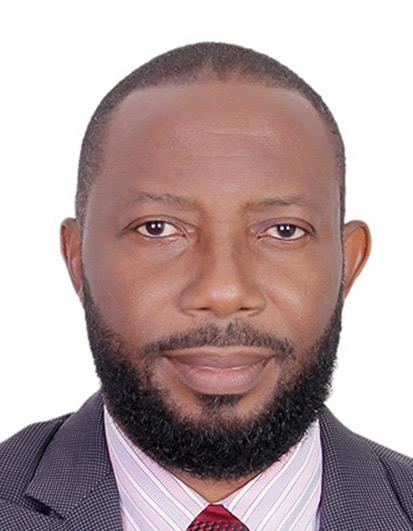
Capt. Warredi Enisuoh, Executive Director, Operations and Technical, Tantita Security Services Nigeria Ltd., has called for the integration of security awareness into Nigeria’s school curriculum to help tackle rising insecurity and protect the nation’s transport and logistics networks.
Enisuoh made the call on Friday while speaking with journalists on the sidelines of the second Nigeria Transport Summit in Lagos.
He said educating children and young people about security risks would help them recognise potential threats and reduce their vulnerability to criminals.
“The amount of insecurity that has somehow inflicted this country is not reflected in the day-to-day education of our children in school. We should start teaching insecurity in school now,” he said.
Enisuoh noted that many Nigerians remained unaware of the risks around them, making it easier for criminals to exploit their vulnerability.
“Because those who will be kidnapped tomorrow are free today. Everybody seems to feel it’s not their business or ‘not my portion,’ but the person who was taken yesterday felt the same way,” he said.
He urged the government to review the educational syllabus to accommodate security education, stressing that awareness should become an integral part of efforts to address the country’s security challenges.
Speaking on the summit’s theme, “Navigating Global Disruptions and the Road Ahead: Mobility, Energy and Trade Facilitation for a Resilient Future,” Enisuoh also called for improved transport infrastructure and the deployment of advanced technologies to secure highways, seaports and other critical facilities.
He said Nigeria’s maritime and road infrastructure required redesigning to address emerging security threats, noting that the aviation sector offered useful lessons through its perimeter fencing, access controls and international security standards.
According to him, modern seaports should increasingly adopt artificial intelligence-powered monitoring systems and facial recognition technology to minimise human intervention and strengthen cargo security.
He disclosed that his team was designing a security network for Delta State that would use facial recognition cameras to identify and track individuals across different locations.
Enisuoh cited the Port of Los Angeles as an example of how automation could improve port security, arguing that technology-driven identification and container management systems could reduce vulnerabilities associated with manual processes.
He also pushed for the development of deeper seaports capable of accommodating larger vessels, saying this would make maritime surveillance more manageable.
“If your port is deeper, you can focus on monitoring ten big ships easily, rather than being distracted by a hundred smaller vessels operating in a shallow environment,” he said.
On highway security, Enisuoh proposed coordinated drone surveillance along major transport corridors, including the East-West Road, to deter kidnappers and protect the movement of commercial goods.
He said thermal drones capable of detecting body heat could help security personnel identify people moving through bush areas and respond more quickly to threats.
“If every state patrols its section using drones, we secure both human lives and the movement of commercial goods,” he said.
Addressing maritime security, Enisuoh said geopolitical tensions in the Middle East, particularly disruptions around the Strait of Hormuz, had increased pressure on Nigeria’s crude oil resources and contributed to attempts by foreign criminal elements to steal oil from Nigerian waters.
He disclosed that Tantita Security Services, working with national security agencies, had intercepted two foreign vessels allegedly attempting to steal crude oil within the 48 hours preceding the summit.
According to him, the company has also deployed long-range surveillance drones for continuous maritime patrols covering the coastline from Warri to the Ghanaian border.
Enisuoh called on the Federal Government to strengthen the protection of Nigeria’s territorial waters against the illegal exploitation of marine resources, including fisheries.
He alleged that some fish sold in Lagos markets as imported products were caught in Nigerian waters before being sold back to Nigerian consumers.
Beyond petroleum, he urged the government to accelerate the exploration and commercialisation of solid minerals to diversify the economy and reduce dependence on crude oil.
“Once we regulate and explore these minerals properly, national wealth will increase, public services will improve, and people will naturally shift their focus away from oil theft,” he said.