Subtotal ₦0.00

Email :51
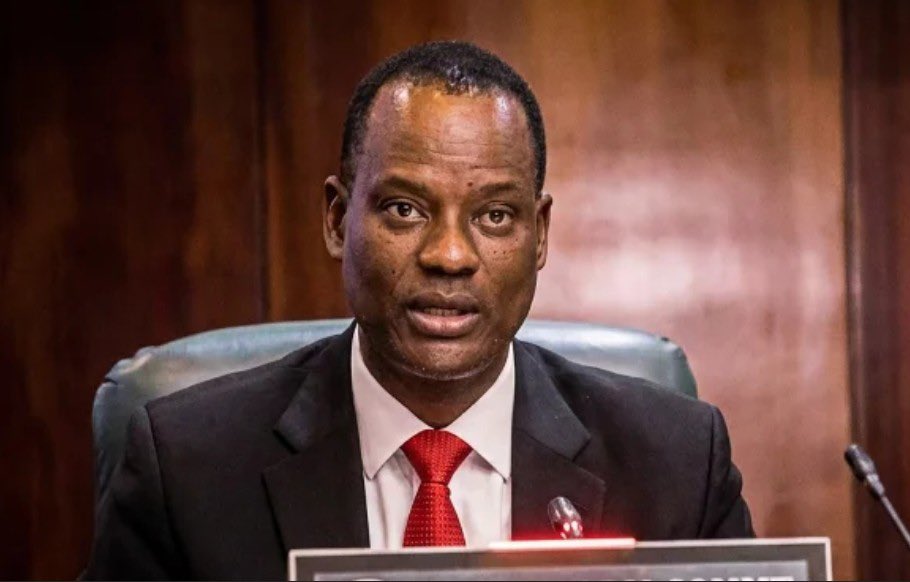
The Federal Ministry of Finance has rejected claims that Federal Government interest payments reached 124 per cent of revenue in the first half of 2026, describing the figure as misleading because it compares debt obligations with an incomplete revenue base.
The ministry, in a statement issued in Abuja on Sunday, said the calculation included debts serviced by the Federal Government on behalf of other tiers of government, including external loans to states, while excluding some government revenues yet to be remitted to the Treasury.
It said the comparison overstated the Federal Government’s interest-to-revenue ratio because the debt and revenue figures did not cover the same level of government.
The ministry was reacting to recent analyses citing the World Bank’s October 2026 Nigeria Development Update, which reported that interest payments amounted to 124 per cent of federal revenue in the first half of the year.
According to the ministry, first-half figures do not provide a complete picture of the government’s fiscal position because revenue collection typically increases in the second half of the year due to the statutory timing of certain tax payments.
It cited the 2025 fiscal year as an example, noting that the interest-to-revenue ratio stood at 156 per cent in the first half but fell below 60 per cent for the full year.
The ministry said the full-year figure represented an improvement from 97 per cent before the current administration’s reforms.
It also argued that, even using the same calculation method, federal revenue was growing significantly faster than interest payments.
Between the first halves of 2025 and 2026, it said federal revenue increased by 72 per cent, from N3.6 trillion to N6.2 trillion, while interest payments rose by 38 per cent, from N5.6 trillion to N7.7 trillion.
Consequently, the interest-to-revenue ratio declined by 32 percentage points, from 156 per cent to 124 per cent, within one year.
The ministry added that the gap between interest payments and revenue narrowed from N2 trillion to N1.5 trillion over the period, describing the trend as evidence of the impact of the government’s reforms rather than an indication of fiscal distress.
It further maintained that debt sustainability should be assessed using full-year figures rather than a six-month snapshot.
Citing the World Bank’s projections, the ministry said Nigeria’s total debt service, covering both interest and principal repayments, was expected to account for 46 per cent of revenue in 2026.
It described the projected full-year ratio as the appropriate benchmark for assessing the country’s debt position.
On borrowing, the ministry said all Federal Government loans were within the limits approved by the National Assembly under the 2026 Appropriation Act and the approved borrowing plan.
It added that government borrowing complied with the Fiscal Responsibility Act 2007 and the Debt Management Office (Establishment) Act 2003, noting that borrowing activities were regularly published by the Debt Management Office.
The ministry said it welcomed scrutiny of public finances but urged analysts and commentators to ensure that figures were compared on a consistent basis and interpreted within their proper context.
It also encouraged stakeholders to seek clarification where published data required further explanation.
The statement was signed by the Federal Ministry of Finance and dated October 18, 2026.